Hassan Salem
Animal-Microbe Interactions
Max Planck Institute for Biology Tübingen
Faculty in: TIPP, IMPRS


Vita
- PhD, MPI for Chemical Ecology, Jena (2014)
- Humboldt Postdoctoral Fellow, Emory University, Atlanta (2015-2018)
- Smithsonian Postdoctoral Fellow, NMNH, Washington D.C. (2018-2020)
- Max Planck Research Group Leader at the MPI for Biology Tübingen (Since 2020)
Research Interest
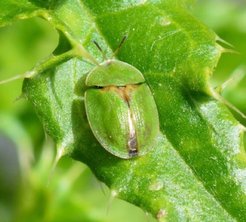
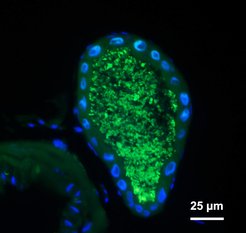
Numerous adaptations in animals are a direct consequence of symbiosis with microbes. We are interested in the molecular currencies driving the cooperation of species, and the genomic and metabolic consequences of coevolution between a host and its symbiont. Our emphasis is on the dynamic relationships that have evolved within leaf-feeding animals, focusing mainly on insects. We use leaf beetles (Coleoptera: Chrysomelidae) as a study system given the streamlined mutualisms they form with specialized symbionts possessing drastically reduced genomes and correspondingly limited metabolisms. These symbioses are defined by the pectin-degrading abilities of the microbe, allowing the insect host to consume, process and subsist on carbohydrate-rich leaves as a sole nutritional resource.
The widespread and convergent evolution of pectinolytic mutualisms in leaf beetles provides a highly tractable model to characterize the molecular and biochemical currencies contributing to the evolution of folivory across the Metazoa. Our work is integrative in nature, combining genomics and fieldwork with chemical ecology and developmental biology to understand the origin and molecular evolution of obligate symbioses.


Available PhD Projects
- Currently not recruiting PhD students
Selected Reading
- Berasategui A, Jagdale S, Salem H. (2023) Fusarium phytopathogens as insect mutualists.
PLOS Pathogens, 17: e1011497. https://doi.org/10.1371/journal.ppat.1011497 - Berasategui A, Breitenbach N, García-Lozano M, Pons I, Sailer B, Lanz C, Rodriguez V, Hipp K, Ziemert N, Windsor D, Salem H. (2022) The leaf beetle Chelymorpha alternans propagates a plant pathogen in exchange for pupal protection. Current Biology 32 (16) 4114-4127 doi: https://doi.org/10.1016/j.cub.2022.07.065.
- Pons I, Gonzalez M, Breitenbach N, Berger J, Hipp K, Salem H. (2022) For the road: Calibrated maternal investment in light of extracellular symbiont transmission. Proceedings of the Royal Society – Biological Sciences 27: 20220386. doi: https://doi.org/10.1098/rspb.2022.0386.
- Salem H, Kaltenpoth M (2022). Beetle-bacterial symbioses: Endless forms most functional. Annual Review of Entomology 67, 201-219. doi: https://doi.org/10.1146/annurev-ento-061421-063433
- Salem H, Kirsch R, Pauchet Y, Berasategui A et al (2020). Symbiont metabolic range shapes host dietary breadth in herbivorous beetles. Current Biology 30 (15), 2875–2886. doi: 10.1016/j.cub.2020.05.043
- Salem H, Bauer E, Kirsch R, Berasategui A, Cripps, M et al (2017). Drastic genome reduction in an herbivore’s pectinolytic symbiont. Cell 171 (7), 1520-15, doi: https://doi.org/10.1016/j.cell.2017.10.029